

Hiring a global consulting giant for your 2026 climate disclosures might feel like the safe bet, but for most Singapore SMEs, it’s actually the fastest way to burn through capital without moving the needle on execution. The market is shifting away from bloated, theoretical slide decks. Instead, the demand for boutique ESG consultants Singapore is surging because business owners have realized that high-level frameworks often fail to survive the operational grit of a local supply chain. You’re likely feeling the weight of mandatory ISSB-aligned reporting and the looming 2026 requirements for Scope 3 emissions, yet the gap between regulatory jargon and your daily operations remains massive.
It’s a frustrating position to be in, but you don’t have to navigate this transition with an empty wallet or a lack of internal expertise. Discover why boutique ESG consultancies offer the pragmatic, grant-funded execution you need to survive the 2026 regulatory shift while building real resilience. We’ll break down how to secure up to 70% funding through the Enterprise Development Grant, reduce your carbon footprint with precision, and ensure your business remains a preferred partner in the global supply chain through a strategy that prioritizes ROI over abstract concepts.
Key Takeaways
- Learn why boutique ESG consultants Singapore are outperforming global giants by delivering operational execution instead of just boardroom theory.
- Understand the mandatory 2026 ISSB reporting requirements and how to prevent your business from being squeezed out of MNC supply chains.
- Identify the critical role of SCMC certification in securing Enterprise Development Grant (EDG) funding to offset a significant portion of your sustainability project costs.
- Discover how to leverage the Market Readiness Assistance (MRA) grant to turn your ESG compliance into a competitive advantage for regional ASEAN expansion.
- Explore the integration of ESG readiness with digital roadmap planning to transform mandatory reporting into a powerful B2B lead generation tool.
The Singapore ESG Landscape in 2026: Why Boutique Consultancies are Rising
Sustainability is no longer a marketing “nice-to-have” or a vague corporate social responsibility initiative. In 2026, the Singapore business environment has transitioned into a strictly regulated ecosystem where carbon data is as critical as your profit and loss statement. While global firms offer high-level “purpose” decks, boutique ESG consultants Singapore are seeing a surge in demand. They solve the one thing SMEs actually care about: survival through execution. Large-firm standardized models often fail in this local context. They provide frameworks that look impressive in a boardroom but crumble when applied to the resource-constrained reality of a mid-sized firm. SMEs don’t have the luxury of detached strategy; they need partners who understand the operational floor as well as the regulatory framework.
Mandatory ISSB Reporting and the SME Impact
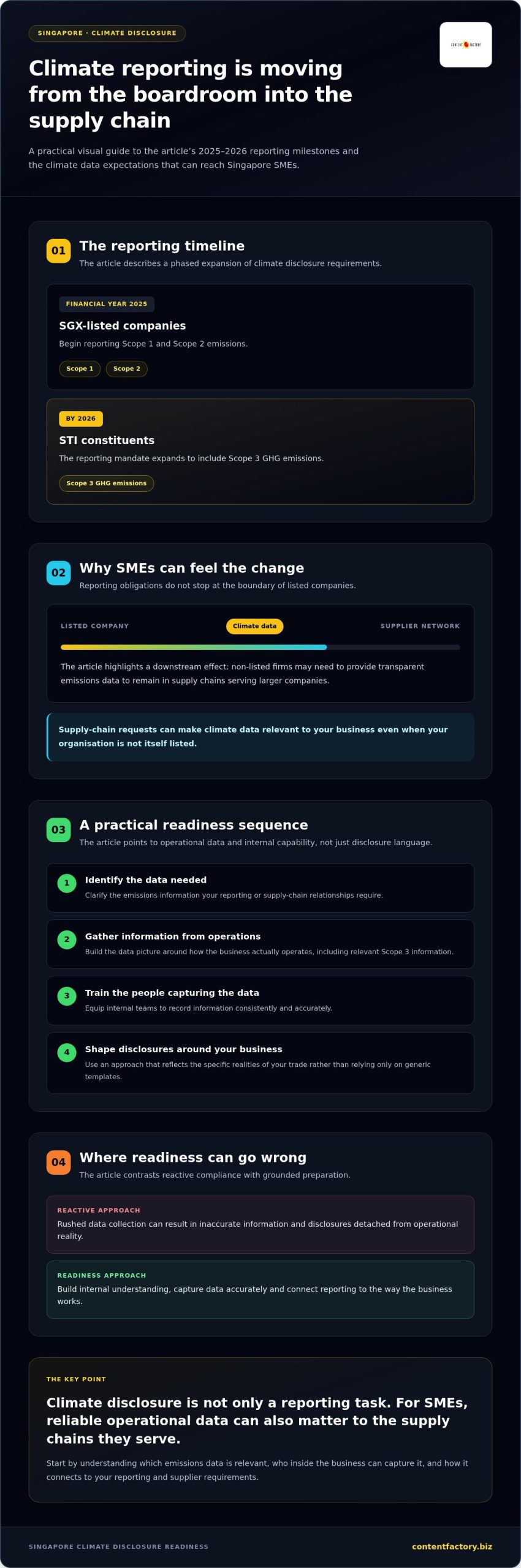
The shift to mandatory climate reporting Singapore has moved from a phased suggestion to a hard reality. Starting in the financial year 2025, SGX-listed companies began reporting Scope 1 and 2 emissions. By 2026, the mandate expanded to require Straits Times Index (STI) constituents to report on Scope 3 GHG emissions. This isn’t just a hurdle for the “big boys.” It creates a massive trickle-down effect where non-listed firms must provide transparent data to remain in the supply chain. A strategic readiness mindset is the only way forward. Compliance-only approaches usually result in rushed, inaccurate data that invites regulatory scrutiny and financial risk. This risk management extends beyond carbon; for instance, FaultLine Cyber & Security Ltd provides exposure assessments that reveal hidden cyber and operational risks, helping directors build a more resilient governance framework.
The Supply Chain Reality: ESG as a License to Operate
Modern Environmental, social, and corporate governance (ESG) standards have evolved into a literal license to operate. Tier 1 suppliers are now vetted based on their GHG emissions data. If you can’t provide a verified carbon footprint, you’re likely to be replaced by a competitor who can. A boutique consultant’s hands-on approach is far better for gathering this complex Scope 3 data. They act as pragmatic mentors, training internal teams to capture data accurately rather than relying on distant global entities. This ensures your sustainability roadmap is built on operational truth, not just theoretical models. The goal is agile, execution-focused consulting that prioritizes your business survival alongside its impact. To understand exactly what verifiable data your enterprise clients are demanding, reviewing a structured supply chain ESG compliance checklist for SMEs is an essential starting point before engaging any consultant.
Boutique vs. Big 4 ESG Consulting: A Comparative Framework for Decision-Makers
Choosing between a global consulting giant and a specialized firm isn’t just about prestige; it’s a fundamental decision about how your capital is deployed. For many Singaporean SMEs, the allure of a Big 4 name often leads to a “Boardroom focus” that stops at the executive level. You pay for the overhead of a skyscraper in the CBD, yet the actual work is frequently delegated to junior associates who have never stepped onto a manufacturing floor or managed a local warehouse. In contrast, boutique ESG consultants Singapore offer a project-based value model that prioritizes the “Operational floor focus” required to actually move the needle on carbon metrics.
Agility is the defining currency of 2026. As regulatory requirements shift, a boutique partner can pivot your strategy in days, not months. They avoid the cookie-cutter reporting templates that lack materiality, ensuring your disclosures reflect the specific nuances of your trade. This local expertise is vital as the Monetary Authority of Singapore continues to refine the landscape for Sustainable Finance in Singapore, creating a environment where precision beats generic compliance every time.
Expertise Without the Overhead
The secret that global firms don’t want you to know is that boutique leaders often come from the same high-level backgrounds as Big 4 partners. You’re getting the same intellectual weight without the bloated hourly rates. It’s not about receiving a 200-page PDF that gathers digital dust; it’s about receiving a 10-step implementation roadmap that your team can actually follow. Direct access to a senior advisor, particularly an SCMC-certified consultant, ensures that your project remains eligible for government grants while maintaining a lean, high-impact structure.
The Implementation Gap: Who Actually Does the Work?
A common pitfall in sustainability projects is the implementation gap. Large firms often provide the “what” and the “why” but leave your internal team to struggle with the “how.” This is where many ESG initiatives fail, as internal staff lack the technical training for complex GHG emissions calculation. Boutique firms thrive by offering end-to-end support, staying on-site until the carbon accounting is accurate and the reporting framework is robust. This hands-on guidance is essential for navigating niche industry standards; for instance, companies with agricultural supply chain links can learn more about Fair Farms to see how they support growers with specialized HR and social compliance services. If you’re unsure where your current capabilities stand, starting with a comprehensive ESG readiness assessment Singapore is the most logical first step to identifying your specific gaps. We recommend you evaluate your internal data maturity before committing to a long-term reporting cycle.
Key Criteria for Selecting Boutique ESG Consultants in Singapore
Identifying the right strategic partner in a crowded market requires looking past polished websites and focusing on hard credentials. Many firms claim expertise, but few possess the specific certifications and technical depth required to navigate the Singaporean regulatory environment. When evaluating boutique ESG consultants Singapore, your checklist must prioritize two things: grant eligibility and operational technicality. You don’t need a generalist; you need a specialist who understands that ESG is a data problem disguised as a compliance requirement. Choosing a partner who lacks these fundamentals won’t just result in poor reporting. It will likely disqualify you from significant government funding. Before finalizing your selection, it’s worth benchmarking your current position against a practical supply chain ESG compliance framework for SMEs to ensure your chosen consultant addresses your most critical gaps.
The Role of the SCMC in Grant Success
Enterprise Singapore (ESG) maintains strict standards for who can lead grant-funded projects. If your consultant isn’t a Singapore Certified Management Consultant (SCMC), your application for the Enterprise Development Grant (EDG) will be rejected before it’s even reviewed. This isn’t just a bureaucratic hurdle. The SCMC certification ensures the advisor has the professional indemnity and recognized expertise to manage complex business transformations. Navigating grant compliance and the subsequent audits requires a level of assertive pragmatism that uncertified generalists simply don’t possess. The SCMC is the gold standard for management consulting in Singapore.
A strategic consultant also helps you define the ‘Social’ component of your ESG framework, which often includes employee health and wellness programs. To understand how specialized medical diagnostics can be integrated into your workforce health strategy, you can learn more about Digestive Centre and their medical services in Singapore.
Materiality: Identifying What Matters Most
A common mistake is attempting to report on every possible ESG metric, which leads to “analysis paralysis” and wasted resources. A high-quality materiality assessment for ESG is the non-negotiable first step in any boutique engagement. Boutique firms use this process to strip away the “fluff” and identify the specific environmental or social factors that actually impact your financial viability and supply chain standing. For instance, addressing the “Social” pillar might involve prioritizing employee wellness through specialized services like Amazing Hearing Centre to ensure long-term health and safety. Strategic materiality isn’t about being comprehensive for the sake of it. It’s about focusing on high-impact metrics that your customers and regulators actually care about. If your consultant suggests a “one-size-fits-all” framework, they don’t understand your business.
Technical competence in GHG emissions calculation and carbon accounting is the final pillar. As we move toward 2026, your data must be audit-ready and aligned with international standards. Furthermore, the best consultants bring cross-disciplinary skills to the table. They understand that ESG readiness is deeply linked to digital transformation. If your consultant can’t help you build a digital roadmap to automate data collection, your reporting process will remain a manual, error-prone burden. To see how enterprise data platforms can facilitate this, you can discover Kagool and their specialized IT consultancy services. Look for a partner who can bridge the gap between sustainability strategy and digital execution.
Strategic Funding: Leveraging Singapore Government Grants for ESG Projects
Implementation is the graveyard of many sustainability initiatives, primarily due to the perceived cost of high-level advisory. However, the Singapore government has established a robust financial framework to ensure that capital constraints don’t stall your transition. In 2026, the cost of engaging boutique ESG consultants Singapore is significantly offset by strategic grants that prioritize execution over theory. This isn’t just about compliance; it’s about using state support to build a resilient, carbon-efficient operation that can outcompete peers in a low-carbon economy. This funding represents a rare window where the government co-invests in your business’s structural integrity.
EDG for Sustainability and ESG Readiness
The Enterprise Development Grant (EDG) is your primary tool for funding a sustainability roadmap. For projects initiated before March 31, 2026, SMEs can access up to 70% support for sustainability-related costs. To qualify, your firm must have at least 30% local equity and be in a financially viable position to execute the transformation. Boutique consultants serve as grant navigators, ensuring your project structure meets Enterprise Singapore’s strict requirements for carbon accounting and materiality. Not every project qualifies, but a well-modeled roadmap that demonstrates measurable ROI is far more likely to secure approval and survive the post-project audit. Financial modeling is critical here to ensure your cash flow remains healthy throughout the grant reimbursement cycle.
Funding Regional Expansion with ESG Credentials
The Market Readiness Assistance (MRA) grant offers an enhanced cap of up to $100,000 per market until March 31, 2026. This is vital for firms looking to scale into ASEAN or India, where ESG credentials are becoming a prerequisite for high-value tenders. Your sustainability reporting acts as a commercial passport, proving to international partners that your supply chain is audit-ready and risk-mitigated. To ensure your overseas production meets these rigorous standards, you can check out The Inspection Company and their resources on social responsibility audits. ESG reporting and regional business resilience are two sides of the same coin; one provides the data, while the other provides the growth. By structuring your ESG project to align with regional expansion goals, you maximize the impact of every dollar spent and reduce the friction of entering new territories.
The double benefit is clear. You reduce your immediate consultancy outlays while building the internal technical capability needed to manage Scope 3 requirements independently in the future. Working with specialized boutique ESG consultants Singapore ensures your project isn’t just a reporting exercise but a funded growth strategy. Don’t leave your funding to chance. You can partner with an SCMC-certified consultant to ensure your grant application is audit-proof and your strategy is fully funded.
The ContentFactory Advantage: Pragmatic ESG Implementation for SME Growth
ContentFactory doesn’t deliver reports that sit on a shelf; we deliver systems that sit in your operations. As one of the leading boutique ESG consultants Singapore, our approach is built on assertive pragmatism. We recognize that for a Singaporean SME, a sustainability roadmap is only as good as its impact on the bottom line. We combine high-level strategic advisory with the hands-on grit required for GHG emissions calculation and carbon accounting. It’s not about checking a box. It’s about building a digital roadmap that ensures your business remains viable for the next 25 years. We reject the “compliance-only” trap in favor of a model that prioritizes your commercial survival.
This focus on commercial survival often requires a robust digital presence to communicate your ESG milestones to global partners. To see how data-driven growth strategies can amplify your business’s reach in competitive markets like the Middle East, you can learn more about the solutions offered by EmirAds.
Execution-Focused Carbon Accounting
Mid-sized firms don’t need the bloated complexity of a multinational’s reporting suite. They need a GHG emissions calculation process that is accurate, audit-ready, and actionable. We bridge the gap between raw data collection and strategic decarbonization. Our SCMC-led project management ensures that your carbon accounting isn’t just a snapshot of the past but a tool for future efficiency. We don’t just tell you how much carbon you emit; we show you how to reduce it without sacrificing operational momentum. This results-oriented focus ensures your data survives the scrutiny of both regulators and Tier 1 supply chain auditors.
ESG as a Growth Catalyst
This is where we break away from the traditional consultancy model. We view ESG as a powerful B2B lead generation tool. By integrating your sustainability achievements with high-intent SEO and content marketing, we help you communicate your value to global partners who are actively searching for “green” suppliers. This isn’t greenwashing; it’s strategic positioning. For brands looking to scale this impact through performance-led creator campaigns, partnering with an influencer marketing agency singapore can effectively bridge the gap between corporate compliance and public trust. When combined with our expertise in regional go-to-market execution, your ESG readiness becomes the catalyst for successful entry into ASEAN and Indian markets. We turn a regulatory burden into a competitive edge that drives regional market entry success.
Our “no-nonsense” approach prioritizes measurable ROI and supply chain resilience. We understand the pressure of the 2026 regulatory shift because we operate on the same floor as our clients. We aren’t here to provide abstract concepts; we’re here to provide a funded, compliant, and growth-oriented strategy. If you’re ready to stop theorizing and start executing, book a consultation with an SCMC-certified ESG advisor today to move beyond simple compliance and start building a real competitive advantage.
Future-Proofing Your SME Through Strategic ESG Execution
Don’t let capital constraints or a lack of internal expertise stall your progress. With over 25 years of strategic advisory expertise and a deep specialization in EDG and MRA grant cycles, our team provides the hands-on grit needed to turn sustainability into a competitive engine. Our SCMC-led projects ensure your strategy is audit-proof and fully funded. It’s time to stop viewing ESG as a cost and start seeing it as your license to lead in the ASEAN market. Secure your SME’s future with a grant-funded ESG strategy, consult our SCMC experts today. Your roadmap to resilience starts with a single decisive step forward.
Frequently Asked Questions
What is the difference between a Big 4 firm and a boutique ESG consultant?
The primary difference lies in execution depth and cost efficiency. Global firms prioritize high-level strategy and boardroom presentations, while boutique ESG consultants Singapore focus on operational implementation and supply chain grit. You get direct access to senior advisors instead of junior associates. This ensures your ESG framework isn’t just a theoretical document but a working system that integrates with your daily business processes and resource constraints.
Are boutique ESG consultants in Singapore eligible for the EDG grant?
Yes, boutique consultancies are eligible for the Enterprise Development Grant (EDG) if they are led by a Singapore Certified Management Consultant (SCMC). This certification is a non-negotiable requirement from Enterprise Singapore to ensure the quality of advisory. Working with a certified boutique firm allows SMEs to offset up to 70% of project costs for sustainability initiatives initiated before March 31, 2026, making high-level strategy accessible for smaller budgets.
How much does it cost to hire an ESG consultant for an SME?
Market data from January 2026 suggests a typical ESG strategy engagement for a Singapore SME ranges between S$15,000 and S$40,000. When utilizing the EDG grant, out-of-pocket expenses for eligible firms can be reduced to approximately S$7,500 to S$20,000. These figures vary based on the complexity of your carbon footprint and the depth of the materiality assessment required to meet international reporting standards. Prices depend on the project’s technical scope.
What is an SCMC, and why does it matter for my ESG project?
SCMC stands for Singapore Certified Management Consultant, which is the gold standard for management consulting in Singapore. It’s a critical trust signal that Enterprise Singapore uses to vet advisors for grant-funded projects. For your ESG project, an SCMC ensures that the strategic roadmap is professional, audit-ready, and compliant with local regulatory frameworks. Without this certification, your business won’t qualify for government funding like the EDG, potentially increasing your costs significantly.
Can a boutique consultant help with mandatory climate reporting (ISSB)?
Boutique consultants are specifically equipped to handle mandatory ISSB-aligned climate reporting. They provide the technical expertise required to calculate Scope 1 and 2 emissions and, more importantly, navigate the complex Scope 3 requirements mandatory for STI constituents from 2026. A boutique partner doesn’t just provide a report; they build the internal data collection systems your team needs to sustain compliance year after year. They bridge the gap between regulation and operations.
How long does a typical ESG readiness assessment take with a boutique firm?
A typical ESG readiness assessment usually takes between four to eight weeks to complete. This timeline depends on the maturity of your existing data and the complexity of your supply chain. During this period, the consultant identifies materiality gaps, calculates your baseline GHG emissions, and builds a phased implementation roadmap. This structured approach ensures you have a clear path to compliance before mandatory reporting deadlines hit, avoiding last-minute rushes.
Do boutique consultants provide carbon accounting software or just advisory?
Most boutique firms provide strategic advisory combined with digital implementation support for carbon accounting tools. They don’t just hand over software; they ensure the tool is integrated into your operational workflow. The focus is on bridging the gap between raw data collection and strategic decarbonization. This ensures that your GHG emissions data is accurate, audit-ready, and useful for making actual business decisions rather than just filling a report for compliance.
How can ESG consulting help my business expand into ASEAN or India?
ESG consulting acts as a commercial passport for regional expansion into ASEAN or India. Many global partners and government tenders now require proof of sustainability readiness as a prerequisite for contract awards. By utilizing the Market Readiness Assistance (MRA) grant, boutique ESG consultants Singapore help you leverage your sustainability credentials to prove supply chain resilience. This reduces friction during market entry and positions your business as a preferred partner in international trade and tenders. When cross-border growth also involves deploying staff or moving assets abroad, engaging experienced corporate movers like Asiatic International Relocation can help simplify the operational logistics of your regional transition.
Article by
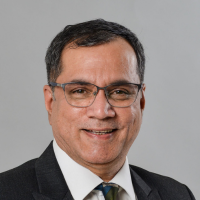
Mayuresh Godse
Mayuresh Godse is a Singapore Certified Management Consultant and Business Strategist specializing in Sustainability, ESG, AI-driven Digital Transformation, and business growth. Based in Singapore, he writes about Sustainability, Digital Innovation, Business Strategy, and Content Marketing for global audiences.
Disclaimer
This article is provided by ContentFactory for general information only and is not legal, tax, accounting or financial advice. Regulations and government scheme criteria change; grant eligibility and quantum are set by the relevant Singapore agencies and assessed case by case, with no outcome guaranteed. Verify current requirements before acting.