

For a Singapore SME, a sustainability consultant helps turn ESG expectations into practical work: setting goals, organising sustainability data, measuring emissions and assessing gaps against relevant reporting frameworks. A sustainability consultant for SMEs in Singapore can also help you understand how frameworks such as GRI, TCFD and ISSB relate to your business, while treating SGX Listing Rules as a benchmark where relevant.
Sustainability reporting can feel like another demand on limited time and resources. A clear assessment helps you focus on the issues that matter instead of collecting data without a defined purpose.
This guide explains what sustainability consulting can cover, how to set goals and measure emissions, and how to assess reporting gaps. It also outlines what to look for when choosing a consultant, so you can judge whether the support fits your SME’s needs and capacity.
Key Takeaways
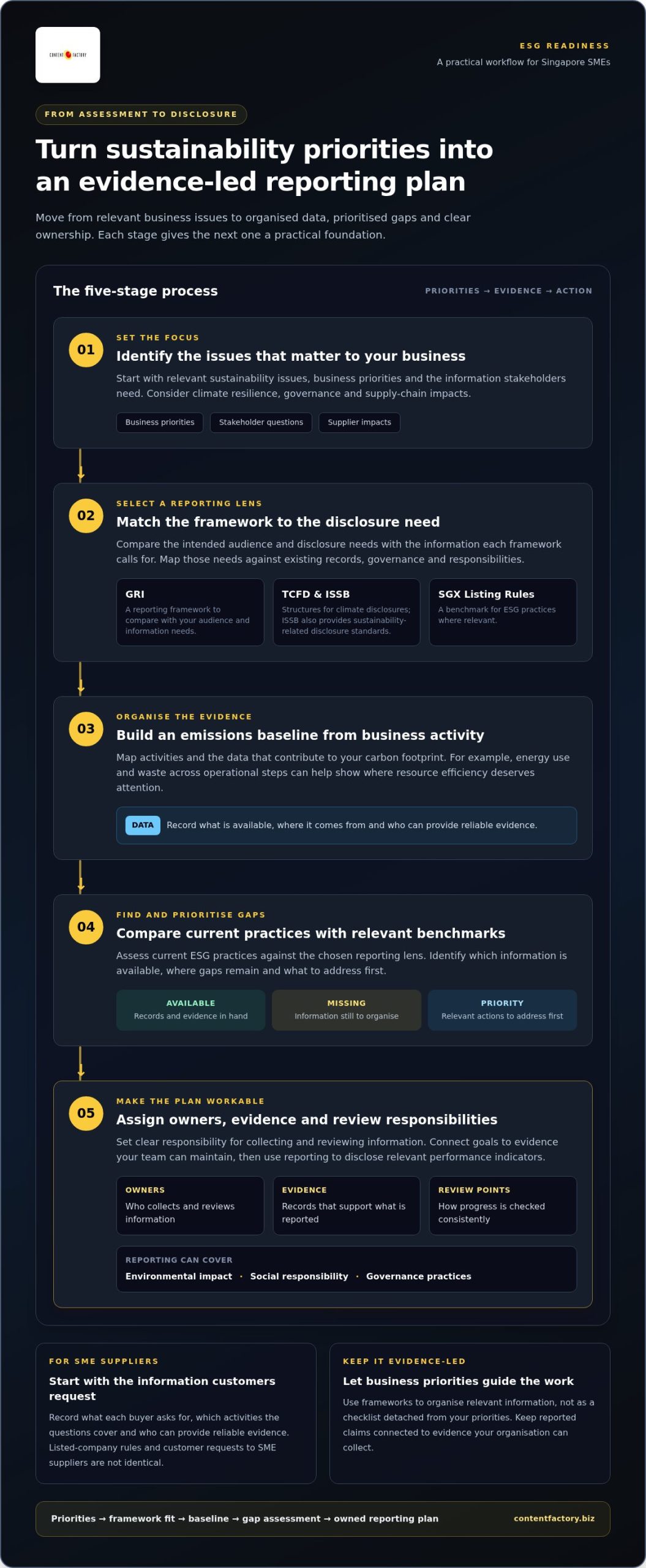
- Start by identifying the sustainability issues most relevant to your business, then turn them into clear goals and practical actions.
- Understand how Singapore reporting expectations and international frameworks may shape the sustainability information your business needs to organise.
- Build an emissions baseline by mapping the activities and data that contribute to your business’s carbon footprint.
- Compare your current ESG practices with relevant benchmarks to identify gaps and prioritise what to address first.
- Choose support that connects assessment, emissions measurement and reporting to a workable plan for your business.
How does sustainability consulting support corporate Sustainability Goals?
Sustainability consulting turns broad goals into an assessment, practical priorities and measurable actions. For a Singapore SME, this can connect climate resilience, carbon measurement, governance and supply-chain impacts.
Climate Resilience and Carbon Measurement
Climate resilience work examines how climate-related conditions could affect operations, suppliers and access to resources. A useful assessment identifies exposures and links them to actions, owners and review points. Carbon measurement provides a baseline for tracking environmental impact and setting focused priorities. For example, mapping energy use and waste across operational steps can show where resource efficiency deserves attention. An ESG strategy framework can help organise these priorities.
Supply-chain sustainability extends the assessment beyond your direct operations. It can identify opportunities to reduce emissions, minimise waste and use resources more efficiently across supplier relationships. Compare suppliers using consistent information, such as energy use, materials and waste practices. Then prioritise engagement where impacts are most relevant. This provides a clearer basis for climate responsibility without assuming every supplier has the same data or influence.
Disclosure Standards and Reporting Frameworks
ISSB standards and TCFD provide structures for climate disclosures. GRI, TCFD and ISSB are also used as frameworks for benchmarking ESG practices. A consultant can map each framework’s information needs against your existing records, governance and responsibilities. The comparison should show which framework suits the intended disclosure, what data is available and where gaps remain.
Governance makes sustainability work operational. Assign responsibility for collecting and reviewing information, and define how climate risks reach decision-makers. Social policies matter too: consider how workplace practices affect employees and how progress is monitored. Reporting can disclose key performance indicators covering environmental impact, social responsibility and governance.
To compare consultants, assess their proposed scope, framework knowledge, data approach and deliverables against the same business priorities. Ask how they will turn findings into actions your team can own, rather than relying on polished recommendations alone.
An external consultant can bring specialist framework and measurement experience, while in-house staff contribute operational knowledge and continuity. External support can fill capability gaps, but employees still need clear responsibilities for maintaining data and carrying out actions.
To verify credentials and track results, request relevant qualifications and examples of work, then check credentials with the organisations that issued them. Agree in advance on baseline measures, named owners, evidence records and review points so you can assess progress consistently.
What is sustainability reporting and why is it important?
Sustainability reporting organises information about environmental impact, social responsibility and governance into disclosures stakeholders can assess. For Singapore organisations, the right reporting approach depends on applicable expectations, business priorities and what readers need to know.
Singapore Reporting Requirements
For listed companies, the SGX Listing Rules provide a benchmark for ESG practices, while the Singapore Exchange publishes sustainability reporting guidelines. These references help organisations structure disclosures and understand relevant expectations. For SME suppliers, customer requests may shape immediate reporting needs. Identify what each buyer asks for, which business activities those questions cover and who can provide reliable evidence.
The rules for a listed company and the information requested from its SME suppliers are not identical. Start by mapping the relevant SGX guidance for listed entities, then record the specific sustainability data customers request from your business.
Reporting Support for SMEs
The SME Sustainability Reporting Programme supports Singapore non-listed SMEs developing their first sustainability reports. Support includes identifying material topics, collecting data and drafting the report. A practical first step is to list available records, assign owners to missing information and decide which topics matter to your organisation. This turns a broad reporting exercise into manageable work with clear responsibilities.
Reporting support is useful when your team needs a defined process from topic selection through drafting. Keep sustainability goals connected to evidence you can collect, rather than making claims your records cannot support.
GRI and IFRS ISSB Standards
The International Sustainability Standards Board published IFRS S1 and IFRS S2 on 26 June 2023. These standards provide a reference point for sustainability-related and climate disclosures. GRI offers another reporting framework; compare its reporting focus with your intended audience and information needs before selecting an approach. Frameworks should organise relevant information, not create a checklist detached from business priorities.
To assess fit, identify the questions stakeholders need answered, then map each question to a framework topic and supporting data. A GRI sustainability reporting framework can help clarify how that structure works.
Reporting and Disclosure
Disclosure makes selected sustainability information visible to readers, including investors, customers and employees. A report can set out key performance indicators covering environmental impact, social responsibility and governance practices. For each indicator, record its definition, source, reporting boundary and responsible owner. These steps make information easier to review and keep consistent across reporting cycles.
Before drafting, check that each statement has evidence and a clear connection to your sustainability goals. If your team needs help aligning disclosures across frameworks, discuss your reporting requirements and the information your organisation needs to prepare.
Singapore SMEs can work with sustainability consultancies that support reporting, framework alignment and data preparation. Compare proposed scopes and deliverables with your reporting needs, available records and internal capacity.
Sustainability strategy and implementation support
A workable sustainability strategy connects your business priorities to environmental risks, opportunities and clear actions. In Singapore, use the Singapore Green Plan 2030 as one benchmark, then develop a plan suited to your operations and capacity.
Tailored Sustainability Strategies
Start by assessing current practices, business activities and stakeholder concerns. Identify material risks and opportunities before choosing initiatives. A manufacturer, for example, might prioritise energy use and material waste, while a service business may focus on workplace practices and supplier information. The right priorities depend on how your organisation operates and where its impacts arise.
Translate those findings into a strategy with defined workstreams, accountable owners and evidence of progress. Map applicable regulations and stakeholder expectations to each workstream, rather than treating every external framework as an identical checklist. A practical ESG strategy framework for SMEs can help organise priorities, responsibilities and review points.
Project planning makes the strategy executable. For each initiative, record the intended outcome, required information, internal owner, dependencies and review process. If an action depends on supplier data, for example, include a step for requesting and assessing that information. This reveals delivery constraints early and helps sequence work around available staff and records.
ESG Targets and Implementation
Set targets only after establishing a baseline and deciding what the business can influence. A useful target specifies the issue, measurement method, responsible owner and review point. For example, a resource-efficiency target needs consistent records for the relevant resource and a process for reviewing changes. This gives employees a clear role in implementation.
Break each target into actions teams can carry out and monitor. Assign responsibilities across operations, procurement and management where those functions affect delivery. Track progress against the baseline, document changes in method and investigate missed milestones. This makes sustainability part of routine operations, not a statement detached from business decisions.
Implementation should also account for changing conditions. The Singapore Green Plan 2030 offers a local reference point, while your assessment determines which environmental issues matter to your organisation. Review the plan when business activities, stakeholder expectations or relevant regulations change. That keeps the strategy connected to the business journey and helps leaders adjust priorities as new risks or opportunities emerge.
Carbon accounting and emissions measurement
Carbon accounting turns activity data into an emissions baseline your business can use to track environmental impact. Start by defining which operational and supply-chain activities the measurement will cover.
Carbon Footprint Accounting
A carbon footprint depends on consistent records for activities such as fuel use, purchased electricity, transport and materials. Group these sources by operational boundary and identify which records support each calculation. Scope 1 covers direct emissions from sources your business owns or controls; Scope 2 covers emissions linked to purchased energy. Scope 3 concerns other value-chain emissions, including relevant suppliers.
Document the measurement boundary and calculation approach. If either changes between reporting periods, explain the change so stakeholders can interpret comparisons accurately.
Emissions Measurement
Measurement quality depends on traceable inputs, clear assumptions and repeatable methods. Gather source records, assign an owner to each data set and note gaps before calculating totals. For example, separate fuel records by vehicle or site where the underlying information allows. This gives you a more useful view of emissions sources than one unexamined total.
The GHG Protocol and ISO will combine their corporate carbon accounting standards into a single harmonised global standard in 2026. Keep calculation records organised so your team can review methods as standards develop. A carbon accounting approach for Singapore businesses should connect measurement choices to available data and reporting needs.
Use the baseline to prioritise emissions reductions before considering carbon credits. A credit is a separate instrument, not a measurement of your own operational emissions. If your business assesses credits, distinguish the proposed credit activity, its evidence and its relationship to your reduction plan. Do not present credit purchases as proof that emissions have been measured or reduced within your operations.
Carbon credit advisory has a different scope from carbon accounting. Clarify whether the work concerns credit evaluation, claims or transaction support, and define the evidence stakeholders would need. Keep those decisions separate from emissions calculations. This prevents credit-related claims from obscuring the underlying carbon data or actions your business controls.
To make the process manageable, begin with an activity register and a data owner for each source. Record the measurement boundary, calculation method and evidence alongside the results. Then identify which emissions sources your business can influence directly, which depend on suppliers and where better data would improve the next assessment. This practical sequence turns carbon information into sustained action and gives stakeholders a clearer basis for tracking progress.
ESG gap analysis against SGX rules and international frameworks
An ESG gap analysis compares your current practices and evidence with relevant reporting benchmarks. For a Singapore SME, it can establish priorities without treating every framework as a requirement for every business.
Start by defining the intended benchmark and scope. The SGX Listing Rules provide a reference point for listed companies’ ESG practices, while the Singapore Exchange publishes sustainability reporting guidelines. Your SME can use relevant customer or investor expectations to decide what information to prepare, without assuming listed-company rules automatically apply to suppliers.
Compare existing processes and evidence. Check whether your business can produce information on energy use, waste generation, resource consumption and social impacts. These data points help establish a baseline and show where collection methods, ownership or records need strengthening. For example, if energy information is spread across site records, note the gap and assign responsibility for consolidating it.
Next, compare policies, data and responsibilities with the chosen framework. Enterprise Singapore’s Sustainability Standards are among the standards businesses may align with. GRI and SASB also offer reporting structures. Record each relevant topic, available evidence, missing information and required action. This turns a framework comparison into a prioritised work plan.
Choose frameworks according to your audience and purpose. GRI and SASB support sustainability reporting, while ISSB standards provide another reference for sustainability-related disclosures. If stakeholders request different information, map overlapping indicators and note where definitions differ. Clear documentation helps keep sustainability performance information consistent across reports.
Green finance frameworks can provide criteria for assessing whether an activity supports a stated environmental purpose. Map the activity, its intended purpose and the evidence available to substantiate progress. Do not describe an activity as aligned simply because it has an environmental benefit. The relevant framework and supporting evidence determine what you can represent accurately.
Use the gap register to set owners, priorities and review points. Separate missing data from missing policies, then address gaps that matter most to your stakeholders and reporting purpose. This strengthens governance and focuses resources on practical improvements.
To discuss ESG framework alignment and readiness, Contact Us.
ContentFactory: ESG Readiness & Materiality Assessments
ContentFactory helps Singapore SMEs turn ESG priorities into an assessment, an emissions baseline and reporting work suited to their needs. Its ESG Readiness & Materiality Assessments help identify relevant topics and gaps, while GHG Emissions Calculation and Carbon Accounting supports emissions measurement. For businesses working across reporting frameworks, Multi-Framework Sustainability Reporting helps organise disclosures against selected standards.
Consider this support when your team needs to decide which ESG issues matter, organise sustainability data or prepare a structured report. You can also take a practical first step: gather existing policies, emissions records and stakeholder requests, then note where information is missing. This gives the work a clear starting point.
To discuss your SME’s sustainability reporting and assessment needs, contact ContentFactory.
Make your next sustainability decision actionable
First, define the decision your business needs to make. Are you responding to a stakeholder request, setting an internal priority or preparing information for reporting? A short brief covering the purpose, intended audience, available data and decision owner will help focus the work from the outset.
A sustainability consultant for SMEs in Singapore should connect that brief to a defined scope and practical next steps. ContentFactory offers ESG Readiness & Materiality Assessments, GHG Emissions Calculation and Carbon Accounting, and Multi-Framework Sustainability Reporting. These services support your business at different stages, from identifying priorities to organising emissions data and preparing disclosures.
Bring your current questions and records into the first conversation. You don’t need a perfect plan to begin; a clear business need is enough to start shaping one. Contact Us to discuss a practical next step for your business.
Frequently Asked Questions
ESG Reality for SMEs: Why It Matters Even More Now and How to Start?
ESG matters when customers, investors or business partners need information about your operations. A supplier questionnaire, for example, may ask about energy use, workplace policies or waste handling. Start with the questions your business already receives, then identify which records can answer them. This provides a practical entry point, links ESG work to commercial relationships and avoids building a reporting process without a clear purpose.
How to create a roadmap for successful sustainability implementation?
Build the roadmap around decisions your business can make and resources it can assign. Name a senior owner and identify the teams affected. Then define each initiative’s intended outcome, dependencies and evidence of progress. For example, a packaging change may depend on procurement approval and supplier specifications. Add review points to management meetings so leaders can resolve obstacles and adjust the workplan as operations or priorities change.
What is sustainability consulting and how can it help my business?
Sustainability consulting provides practical support to assess ESG priorities and organise the work needed to address them. A sustainability consultant for SMEs in Singapore can help your team clarify relevant topics, identify information gaps and establish a process for action. If customer requests arrive through different teams, for example, a consultant can help consolidate them into one register with assigned owners and clear evidence requirements.
What steps are involved in the sustainability journey?
A useful process starts with a business decision, such as responding to a buyer’s sustainability questionnaire. Assign someone to collect the request, record the evidence used and flag information the business cannot yet provide. Share those gaps with the relevant team, then agree on practical follow-up actions. Keep a record of decisions and changes. This builds organisational learning, helping responses become more consistent as new requests arise.
What upcoming regulations should businesses prepare for in 2024?
2024 has passed, so businesses should not treat it as an upcoming regulatory period. In Singapore, the SGX Listing Rules are a benchmark for listed companies’ ESG practices, while SME suppliers may receive sustainability data requests from customers. Separate rules that apply directly to your organisation from buyer expectations passed through commercial relationships. Review the current requirements relevant to your business and assign responsibility for monitoring changes.
What services do sustainability consultants offer SMEs in Singapore?
Services can include ESG readiness and materiality assessments, GHG emissions calculation, carbon accounting and sustainability reporting against multiple frameworks. Support may also cover ESG data processes, capability building and readiness for sustainability assurance. The right scope depends on the task: a business preparing its first report may need different support from one responding to emissions questions. Define the decision or deliverable you need before agreeing on the project scope.
What ESG, carbon reporting, and sustainability requirements apply to Singapore SMEs?
Requirements depend on your organisation’s status and relationships. The SGX Listing Rules provide a benchmark for listed companies, but an SME supplier should not assume every listed-company requirement applies directly to it. Customers may still request ESG or carbon information through procurement processes. Identify which rules apply to your business, then record customer requests separately. This distinction helps prioritise obligations and commercial data needs without confusing them.
What steps should an SME take to measure its carbon footprint in Singapore?
Define the measurement boundary first, then gather activity records for the operations it includes. Separate direct fuel use, purchased electricity and relevant value-chain activities, such as supplier-related information. Record each data source, its unit and any calculation assumptions. Assign owners to maintain the records and preserve the method used. A consistent process helps your team explain how figures were compiled and identify where better source data is needed next.
Article by
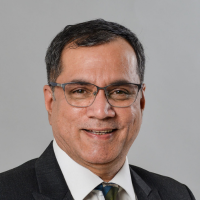
Mayuresh Godse
Mayuresh Godse is a Singapore Certified Management Consultant and Business Strategist specializing in Sustainability, ESG, AI-driven Digital Transformation, and business growth. Based in Singapore, he writes about Sustainability, Digital Innovation, Business Strategy, and Content Marketing for global audiences.
Disclaimer
This article is provided by ContentFactory for general information only and is not legal, tax, accounting or financial advice. Regulations and government scheme criteria change; grant eligibility and quantum are set by the relevant Singapore agencies and assessed case by case, with no outcome guaranteed. Verify current requirements before acting.