

Buying another system won’t fix work that’s already disconnected. Digital transformation for mid-sized firms starts with how work moves across your organisation: where information is duplicated, decisions slow down or familiar processes create friction. It means redesigning operations, then choosing and integrating technology to support them.
It’s understandable that technology decisions feel difficult when daily demands leave little room for disruption. A new platform may promise efficiency, but if it doesn’t fit the workflow or the people using it, it can add complexity. The answer isn’t to change everything at once. Start by identifying the operational problem that matters most and building a practical sequence around it.
This article shows how to assess processes, set focused priorities and connect system choices with implementation and change management. You’ll learn to choose a manageable starting point, define what better performance should look like and involve your team as workflows change. The goal is a deliverable transformation plan, not a technology wish list competing with day-to-day work.
Key Takeaways
- Digital transformation for mid-sized firms starts with changing how work gets done, not simply adding software.
- Map one important workflow to spot duplicated steps, unclear ownership and information gaps before choosing technology.
- Use a practical roadmap to move from diagnosis and prioritisation to requirements, implementation, testing and review.
- Assign clear responsibilities and provide practical training so new systems fit into everyday work.
- Measure progress against the original workflow problem, using indicators that reflect the change your team needs.
What digital transformation means for a mid-sized firm
Digital transformation changes how work gets done, with digital systems selected and integrated to support the new way of working. It is more than moving a form online, replacing one tool or automating a process without changing it. For digital transformation for mid-sized firms, the focus is on how tasks, decisions and information move through the organisation, and where those flows need to improve.
Operational signs of friction can be easy to overlook because they become part of the routine. Staff may enter the same information in more than one place, pass work manually between teams, struggle to see a task’s status or rely on workarounds to complete a process. These signals point to a gap between the way work is organised and the systems intended to support it. Following one item of information from its source to the point where it is used can help reveal that gap.
How transformation differs from buying new software
A software purchase is an input, not evidence that operations have improved. Imagine a service request recorded in one system, copied into a tracking sheet, passed to a colleague by email and entered again when completed. A new platform might bring records together, but the outcome still depends on deciding who owns each step, what information is required and how the system fits the workflow.
If ownership stays unclear or the technology doesn’t support the actual sequence of work, staff may keep using the old workarounds. Trace the information through the process before choosing a tool. That helps you define the problem, assess system fit and identify where integration may be needed. See how this connects to digital transformation planning.
Why mid-sized firms need a proportionate approach
Your team must keep serving customers and managing daily operations while changes are being made. Redesigning too much at once can stretch available capacity and make new workflows harder to adopt. A proportionate approach starts with one clear bottleneck, then examines whether process changes and suitable system support can address it.
Set priorities around the operational constraint, not the latest technology trend. A new tool may be appropriate, but only if it supports a defined need and fits the wider workflow. As a practical first step, choose one recurring process and note where information is repeated, delayed or difficult to track. That gives your team a concrete basis for deciding what to improve first.
Build the transformation around processes, systems and information
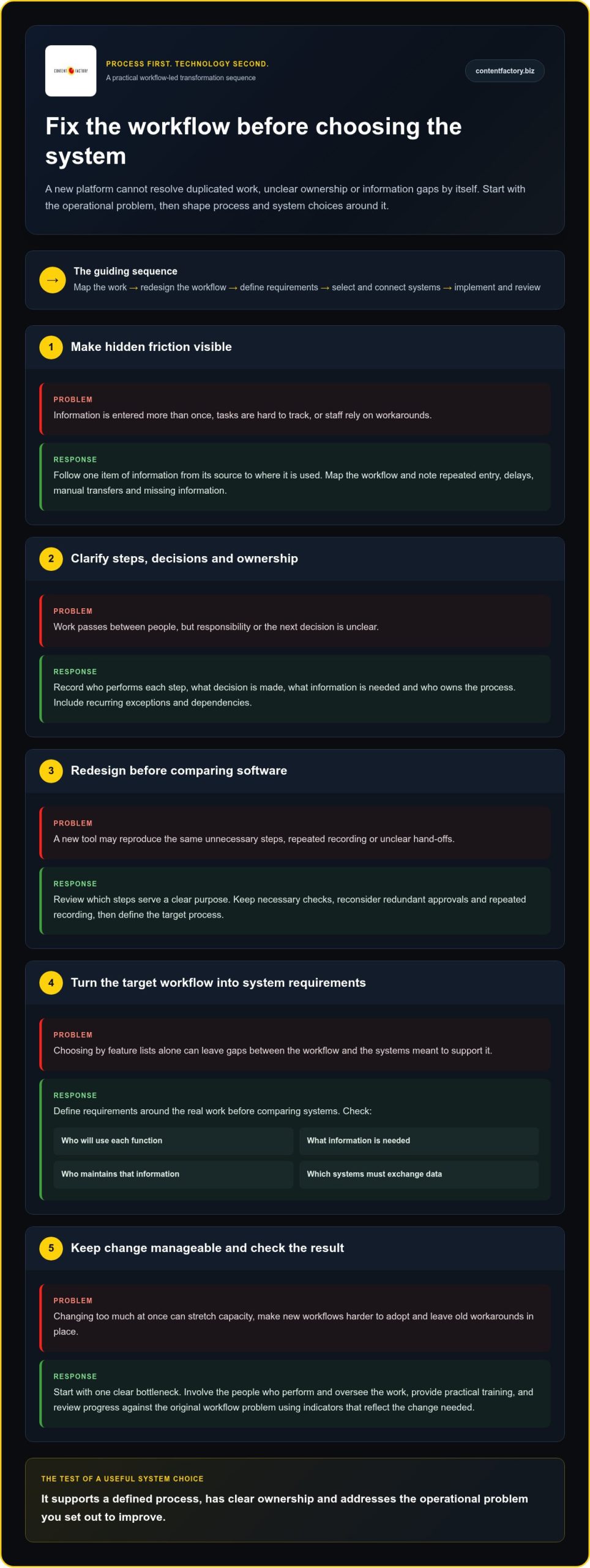
Before comparing technology, map a workflow from its starting point to its outcome. Record who performs each step, what decision is made, which information is needed and where work passes between people or systems. This makes duplicate entry, unclear ownership, manual transfers and missing information visible. It also shows where a delay or workaround begins, rather than treating its symptoms as separate problems.
Technology creates value when it fits a defined process and an accountable owner. That means understanding the work first, then setting system requirements around the redesigned workflow. The map should also capture exceptions and dependencies, such as information that must be checked before a task can proceed or another team’s action that affects completion.
Redesign the workflow before choosing technology
Document the current steps, hand-offs, decisions and recurring exceptions. Then examine which steps serve a clear operational purpose and which remain only because they have always been done that way. Keep necessary checks, but reconsider redundant approvals or repeated recording that no longer supports the outcome. This is the practical starting point for business process reengineering.
For example, trace a purchase request from submission through review, approval and recording. Note where information is re-entered and who is responsible when a request is incomplete. The result should be a clear target process, not just a diagram of the current one.
Select and connect systems around real requirements
Translate the target process into requirements before comparing systems. Identify the people who will use each function, the information they need, who is responsible for maintaining it and which other tools must exchange data. A finance system may need information from an operational platform, for instance. If those connections are missed, staff may still rely on manual transfers or duplicate records.
Also record dependencies that could affect implementation, such as existing processes or information that must be available before a new workflow can operate. This keeps selection grounded in operational needs rather than a long list of features. Explore technology adoption and system integration when assessing how systems can support those requirements.
A useful next step is to map one workflow with the people who perform and oversee it, then agree on its owner and the information required at each hand-off. American Express’s Digital Transformation Strategies also offers a practical perspective on defining goals and identifying areas for change. If you need support connecting process requirements to system decisions, explore digital transformation planning support.
Avoid the misconception that more technology means more transformation
Implementing software changes the tools your team uses. It does not automatically change how work is organised, who is accountable or how decisions are made. Digital activity is the use of technology; an operational outcome is a measurable change in how work is completed. That distinction matters when planning digital transformation for mid-sized firms, where each new system must support a clear business need.
A tool-first approach can make sense when a genuine system gap is already understood. It may also help address an urgent operational requirement. But if you choose a platform before clarifying the workflow, you risk reproducing unclear steps in a new environment. Overlapping systems can create competing records, while automation can make an unnecessary step happen faster without resolving why it exists.
What happens when technology comes before process clarity?
Consider a task that moves through several people, with each person interpreting the next step differently. Moving it into a new system may expose the uncertainty, but it won’t settle who owns the decision or what information is required. Integration needs depend on those workflow details: which system holds the authoritative information, who updates it and when another team needs it.
Process-first decisions take more effort up front. They require people to examine existing routines and agree on how work should flow. In return, they give system selection a firmer basis. Tool-first decisions may feel faster, but can bring extra configuration, workarounds or parallel processes if the design assumptions don’t match daily operations. Neither approach guarantees results; the right choice depends on the problem, its dependencies and the capacity to implement change.
How to balance continuity with meaningful change
Not every existing step needs redesign. If a process works and supports the required outcome, preserving it can protect continuity while attention goes to a persistent bottleneck. If the process repeatedly causes delays, rework or confusion, keeping it unchanged simply because it is familiar may carry that friction into the new system.
Make the decision explicit. Name who can approve process changes, who owns the system decision and which users need to test the revised workflow. Then agree how progress will be reviewed, using criteria linked to the original issue, such as whether duplicate recording has reduced or hand-offs are clearer. Introducing change in manageable releases can help your team learn and adjust without losing sight of ongoing operational responsibilities.
Create a practical digital transformation roadmap
A useful roadmap turns an operational problem into a sequence of decisions, owners and deliverables. For mid-sized firms, this keeps the work focused on business needs while giving your team a clear way to test and adjust the plan. The sequence is practical: diagnose, prioritise, define requirements, plan implementation, test and review.
Prioritise digital transformation for mid-sized firms
Start by assessing the workflow’s business importance, friction, dependencies, user impact and readiness for change. Don’t mistake a visible symptom for the root problem. For example, a delayed task may appear to need faster data entry, but the underlying cause could be unclear approval ownership or missing information at hand-off.
Use the following sequence to turn that diagnosis into an owned plan:
- Diagnose: The process owner decides which workflow to examine. The output is a current-state map showing steps, hand-offs, exceptions and the original problem.
- Prioritise: The business lead selects the initiative based on its operational importance and dependencies. The output is a defined scope and a reason for addressing it now.
- Define requirements: The process owner and relevant system users agree what the revised workflow must support. The output is a requirements brief covering roles, information and system connections.
- Plan implementation: The project lead sets out responsibilities, implementation activities and user involvement. The output is a delivery plan with decision points and risks to manage.
- Test and review: Users test the workflow, while the business owner decides whether it meets the agreed criteria. The output is a review record of issues, adjustments and next steps.
Set ownership, feedback and review points
Assign one business owner with authority to make decisions across the affected workflow. Involve users during design and implementation, not only after launch; they can identify practical gaps before those gaps become workarounds. Agree review criteria in advance and tie them to the initial problem, such as fewer repeated entries or clearer responsibility at a particular hand-off.
Keep the plan proportionate. Choose one material workflow and document its current state before expanding the scope. For support connecting diagnosis, priorities and delivery planning, see digital roadmap and implementation planning. Contact Us to discuss a roadmap for your operations.
Make implementation and adoption part of the transformation
A system only supports the intended change when people know how their work is changing and what they are responsible for. Treat implementation as part of the operating change, not as a technical handover at the end of a project. Clear roles, useful communication and task-based training help teams apply the new workflow consistently.
Prepare teams for changed workflows
Before rollout, identify which roles are affected, where decisions are made and whether responsibilities are changing. Explain what is changing, why the process is changing and where staff can raise issues. This gives people context, rather than leaving them to interpret a new system without understanding how it fits their work.
Training should reflect the tasks users actually perform. A generic system demonstration may show available features, but it may not prepare someone to complete a real task, handle an exception or pass accurate information to a colleague. Use relevant workflow examples, let users practise, and make support available as they begin applying the revised process. See how change management and training can support adoption.
Connect implementation planning to operational outcomes
Keep the original process problem as the reference point during implementation and review. If the change aimed to reduce repeated information entry, check whether users still have to enter the same details in more than one place. If the issue was unclear hand-offs, review whether responsibilities and next steps are now understood. Choose indicators that fit the specific workflow, and agree who will gather and review that feedback.
Implementation should remain iterative. Give users a clear way to report issues, assess which ones affect the workflow, then refine the process or system configuration as needed. Coordinate the roadmap, process redesign and system integration so that a change in one area does not leave another step unsupported. Review feedback with the people doing the work, not only with project leads.
For digital transformation for mid-sized firms, adoption is not a final training session or a launch date. It is the ongoing work of making sure roles, processes and systems support the intended operational outcome. ContentFactory supports this work through Digital Transformation & Process Redesign, from roadmap planning to implementation and change management. Contact Us to Book a Strategic Consultation.
Turn your next improvement into a deliverable plan
Digital transformation for mid-sized firms works best when technology follows a clear operational need. Start with one important workflow, identify what needs to change, then set out the system requirements, responsibilities and measures that will show whether the change is working. A focused roadmap gives your team a practical way to move forward without trying to change everything at once.
Keep implementation connected to everyday work. Clear ownership, task-based training and regular feedback help you spot issues early and refine the process as your team adopts it. The aim is not to add more tools, but to make work clearer and better supported.
ContentFactory supports digital roadmaps, process redesign, technology adoption, system integration and change management. Mayuresh Godse is a Singapore Certified Management Consultant with 25+ years of consulting experience. If you’re ready to turn an operational challenge into a focused plan, Contact Us to Book a Strategic Consultation. A manageable first step can set a clear direction for lasting operational change.
Frequently Asked Questions
What is digital transformation for a mid-sized firm?
Digital transformation changes how a firm carries out work, with digital systems supporting redesigned processes. It goes beyond moving a form online or buying software. For example, a firm might clarify who handles each stage of a request, reduce repeated data entry and connect the systems that hold relevant information. The aim is a more coherent way of working, not simply a larger collection of technology.
Is digital transformation only for large companies?
No. A mid-sized firm can start by improving one important workflow rather than launching a company-wide programme. The right scope depends on its operational priorities, existing systems and capacity to manage change. A focused initiative might address repeated manual hand-offs in a core process. The key is to set a clear objective, assign an owner and make sure the change can be implemented alongside day-to-day responsibilities.
Can a mid-sized firm transform without replacing all its systems?
Yes. Transformation doesn’t require replacing every system. First, identify what the process needs and assess whether existing tools can support the revised workflow. Some systems may remain useful, while others may need to connect or change. For instance, a finance system could stay in place while information flows between it and another business tool are improved. Base replacement decisions on operational requirements, not on a preference for newer software.
How should a mid-sized firm start digital transformation?
Choose one material workflow and document how it works now. Record its steps, hand-offs, decisions, information needs and recurring exceptions. Then identify the main problem, such as unclear ownership or duplicated entry, and agree who can make decisions about changing the process. This gives you a practical starting point for setting requirements, planning implementation and deciding how to review whether the change addresses the original issue.
What technologies are used in digital transformation?
The technologies depend on the work that needs to change. A firm may use ERP or finance systems, CRM platforms, integrated business tools, automation or enterprise AI and machine learning. No category is automatically the right choice. Define the workflow, users, information flows and system connections first. Then assess which technology can support those requirements and fit the organisation’s existing operations. For firms looking into advanced solutions such as synthetic workforce deployment and AI agents, specialized GenAI advisors like Navo Inc. can help integrate these capabilities into redesigned workflows.
What are common risks in digital transformation?
Common risks include choosing technology before clarifying the process, creating overlapping systems, leaving ownership unclear and automating steps that should be redesigned. Teams may also struggle to adopt changed workflows if roles, communication and practical training are overlooked. Reduce these risks by involving affected users, assigning a business owner and testing the revised process. Review progress against indicators linked to the initial operational problem, then address issues as they arise.

Article by
Mayuresh Godse
Mayuresh Godse is a Singapore Certified Management Consultant and Business Strategist specializing in Sustainability, ESG, AI-driven Digital Transformation, and business growth. Based in Singapore, he writes about Sustainability, Digital Innovation, Business Strategy, and Content Marketing for global audiences.
Disclaimer
This article is provided by ContentFactory for general information only and is not legal, tax, accounting or financial advice. Regulations and government scheme criteria change; grant eligibility and quantum are set by the relevant Singapore agencies and assessed case by case, with no outcome guaranteed. Verify current requirements before acting.